
Custom Box Design for Your Brand: The A-to-Z Process
How is a branded box designed from scratch? We walk through brief, sketch, material selection, sampling and mass production.
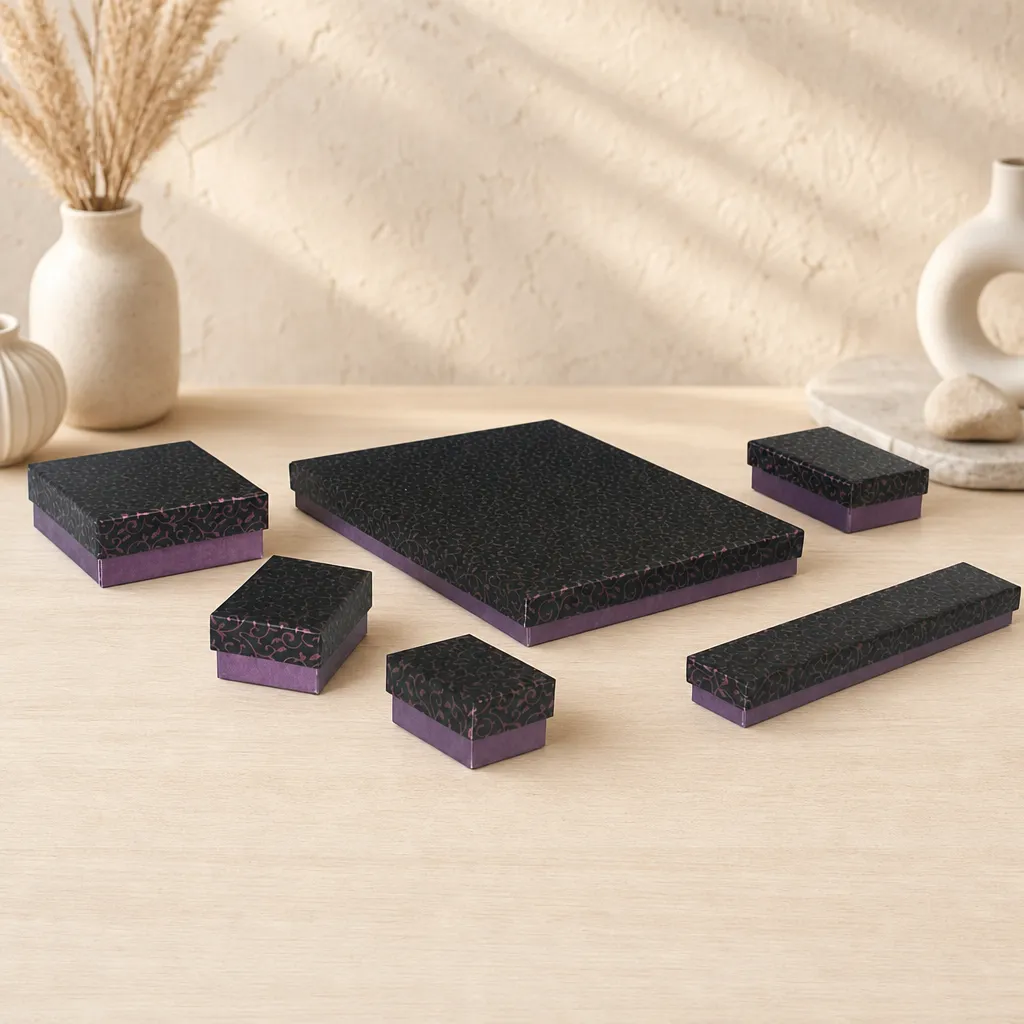
A custom box design for your brand is much more than picking a ready-made template. It is the customer’s first point of contact with your brand identity; done right, it shapes the customer’s perception of the brand before they even use the product. At Zen Kutu we run our bespoke projects in these 6 stages.
1. Brief — understanding the product and the brand
The first step is to clarify the goal:
- Which product(s) will go in the box?
- Is the box a gift, e-commerce, shelf packaging, or corporate?
- What does the target audience expect — premium, eco-friendly, playful?
- Budget and quantity range?
- Delivery date?
These answers determine everything else in the design.
2. Concept and sketch
Once the brief is complete, the design team prepares 2–3 different concepts:
- Box structure (magnetic lid, drawer, butterfly, etc.)
- Material suggestions (book cloth, coated paper, chipboard, faux leather)
- Inner padding solutions (suede, EVA, divider structures)
- Print direction (minimal-monogram, full-colour, hybrid)
Drawings are usually presented as 3D mockups — you can see the real form of the box before it is printed.
3. Material and technical decisions
Once the concept is approved, technical specifications are set:
- Chipboard thickness (usually 1.5 mm–2.5 mm)
- Wrapping material (matt/gloss, weight)
- Printing method (offset, digital, screen printing)
- Finishes (foil, embossing, varnish, lamination)
- Inner padding (satin, suede, EVA foam, chipboard divider)
4. Sample production
The most critical stage. A design can look great on paper, but a physical sample:
- Verifies colour matching (especially Pantone)
- Tests the opening-and-closing mechanism
- Shows whether the inner padding really protects the product
- Answers the customer’s “how does it feel in my hand” question
One or two sample iterations are standard and recommended. Never move into mass production without sample approval.
5. Mass production
Once the sample is approved, production is planned. A standard mass-production process:
- Chipboard cutting and frame building
- Printing and finishing of the wrapping material
- Wrapping (lamination) — handwork or semi-automatic machine
- Inner padding placement
- Quality control (random sampling per batch)
- Packing and shipping
The timeline can range from 2 to 5 weeks depending on quantity and finishes.
6. Delivery and future batches
After the first mass production run, the dies and printing plates are stored. The next order is much faster and usually at a lower cost. That’s why long-term brands prefer annual planning over one-off orders.
Common mistakes
- Settling for a single sample — Colour or texture differences grow at scale
- Ordering too few — Unit cost multiplies, die costs don’t amortise
- Involving the manufacturer too late — A designer may propose impossible dimensions; the manufacturer should be involved from the start
- Not providing Pantone — Say “Pantone 186 C” instead of “make it red”
Conclusion
A custom box is not a one-off print run; it is the physical extension of your brand. With the right planning, the customer keeps the box instead of throwing it away — that means free, long-term brand exposure.
Related products: Cloth-wrapped rigid boxes · Multi-purpose gift boxes
Send your brief and visuals for your custom box project via WhatsApp; we’ll come back with 2–3 concept proposals.
Get a quote for your box project
Send us the box type, size and quantity you need on WhatsApp; we'll get back to you shortly.
Message on WhatsApp →